Table of Contents
A roof leak in winter in Bismarck almost always starts the same way: warm attic air meets a subzero night, and something in the roofing system stops working the way it should.
With freezing temperatures and repeated freeze-thaw cycles that can stretch from October through April, Bismarck homes face winter roof stress most climates never see.
The direct answer is this: your leak is likely an ice dam, trapped condensation, or an insulation gap letting heat escape into the attic, and each one needs a different fix.
What a Winter Roof Leak Actually Looks Like Inside a Bismarck Home
Homeowners rarely spot the real problem on the roof first. Instead, they notice it inside the house:
- A brown or yellow stain spreading across a ceiling near an exterior wall.
- Damp insulation or a musty smell coming from the attic.
- Peeling paint or bubbling drywall near the roofline.
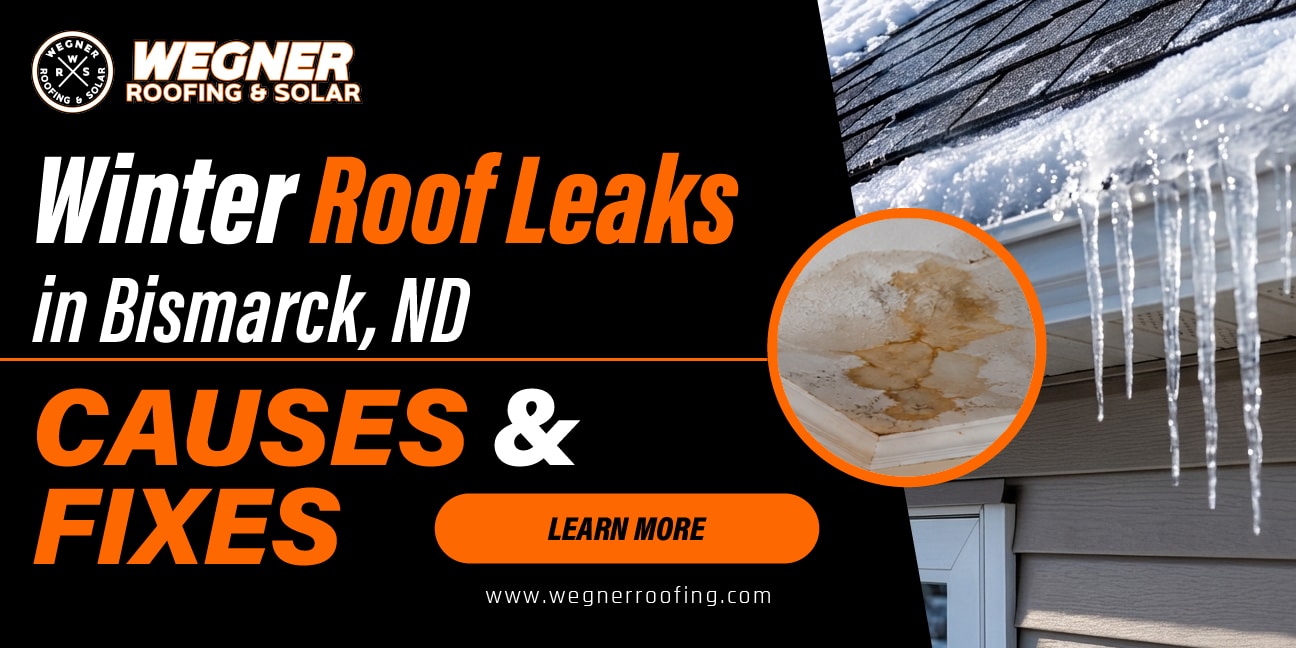
- Thick icicles paired with a solid ice ridge along the gutter line.
- Frost coating the underside of the roof deck, a sign of attic frost that Bismarck homeowners often mistake for normal winter buildup.
These signs point to three separate problems that get lumped together as one.
Ice Dams: The Most Common Cause of a Winter Roof Leak
When an under-insulated attic releases heat, it warms the center of the roof and melts the snow, triggering the creation of ice dams.
This melted snow flows down to the freezing roof edges and turns back into ice, creating a solid barrier that forces pooling water underneath your shingles.
Architectural asphalt shingles are built to shed water flowing downhill, not water pooling against the shingle laps, which is exactly what an ice dam forces them to do.
This mechanism is the leading driver of the ice dam leaks North Dakota homeowners report between December and February.
How Fast an Ice Dam Can Cause Interior Damage
- Day 1-3: Meltwater pools behind the ice ridge, mostly invisible from the ground.
- Day 4-7: Water works under the underlayment and shingle laps.
- Week 2: Ceiling stains or damp attic insulation appear.
- Week 3+: Paint bubbles, drywall softens, and mold risk climbs.
Condensation vs. a True Leak: How to Tell the Difference
Not every wet spot in a Bismarck attic is a roof leak. In cold climates, warm, humid indoor air rising into a freezing attic causes roof condensation by forming moisture on the roof deck and nail heads, often resembling a gradual roof leak.
The difference matters because condensation points to a ventilation or air-sealing problem, not a hole in the roofing system.
Signs it’s condensation:
- Moisture appears only in cold weather, often on nail tips or metal flashing.
- No staining pattern tied to a specific roof penetration.
- Visible frost on the underside of the decking during a cold snap.
Signs it’s a true leak:
- Staining traces back to a valley, chimney, or vent pipe.
- Water appears during or right after a snowmelt or wind event.
- The wet area keeps growing regardless of indoor humidity levels.

Insulation Gaps Are Usually the Root Cause, Not the Roof Itself
Understanding the insulation and roof leak connection changes how a repair gets approached.
Many Bismarck attics were insulated to a standard that no longer matches today’s energy codes, leaving gaps around light fixtures, attic hatches, and exhaust fans.
Warm air escapes exactly there, melting snow directly above those weak points and creating localized ice dams even when the rest of the roof stays cold and dry.
Common Insulation Weak Points in Older Bismarck Homes
- Recessed lighting fixtures without proper attic-side sealing.
- Bathroom or kitchen exhaust fans venting into the attic instead of outside.
- Compressed or thinned insulation near the eaves.
- Missing baffles that block soffit airflow needed for balanced ventilation.
How Wegner Roofing Diagnoses a Winter Roof Leak in Bismarck, ND
A proper diagnosis starts in the attic, not on the roof. Technicians check frost patterns, insulation depth, and ventilation balance before touching a shingle.
This attic-first approach is how an experienced North Dakota roofing contractor traces the problem to its real source instead of patching a symptom that returns next January.
If you are seeing ceiling stains, ice ridges, or attic frost right now, Wegner Roofing & Solar offers a free roof inspection to confirm whether you’re facing an ice dam, condensation, or an insulation gap before it spreads further into your home.
What to Do the Moment You Spot a Winter Roof Leak
- Move furniture and valuables away from the stained area.
- Place a bucket under the drip and relieve a bulging ceiling with a small, controlled hole.
- Avoid climbing on an icy roof yourself.
- Call a licensed North Dakota roofer for roof repair before the water spreads further.
Can Roof Repairs Happen During a North Dakota Winter?
Yes. Emergency tarping and targeted fixes, such as resealing flashing, replacing a pipe boot, or clearing an ice dam, can be done safely in winter by an equipped crew.
Full ridge-to-eave replacements are usually scheduled for warmer months, but stopping an active leak should never wait for spring.
Don’t let a January leak turn into a spring drywall project. Wegner Roofing & Solar responds fast to winter leak calls across Bismarck-Mandan with no dispatch fee.
For a fuller picture of how our winters stress every part of a roof system, read our guide, Roofing in Bismarck, ND: What Homeowners Need to Know.
Why Local Experience Matters More Than a Quick Fix
Established in 2011, Wegner Roofing & Solar operates locally from its Airport Road office in Bismarck, working through the harsh freeze-thaw seasons Burleigh County throws at it.
That local footprint, visible on our Google Business Profile, means a technician diagnosing your attic frost today has likely seen the same failure pattern on a neighbor’s roof last winter.
Key Takeaways
A roof leak in winter is usually one of three problems: an ice dam, condensation, or an insulation and ventilation gap.
Ice dams form when attic heat melts snow that refreezes at the eaves, forcing water back under shingles.
Condensation looks similar to a leak but points to airflow issues rather than a hole in the roof.
Fixing only the visible leak without addressing insulation or ventilation means the problem returns next freeze.
Protecting Your Bismarck Home Through Every Freeze-Thaw Cycle
Winter roof problems in Bismarck are rarely caused by just one thing, which is why guessing leads to repeat repairs.
Whether the issue traces back to an ice ridge at the eaves, condensation building on a cold deck, or a gap in the attic insulation, the fix depends on correctly identifying which one you’re dealing with first.
A documented, attic-first inspection removes the guesswork and gives you a clear, honest next step before another cold front rolls through.
Ready to get ahead of the next freeze? Call Wegner Roofing & Solar today to schedule your free inspection and stop a winter roof leak before it reaches your drywall.


FAQs About Winter Roof Leaks in Bismarck, ND
Why does my roof leak only in winter?
Winter-only leaks usually come from ice dams or condensation rather than storm damage.
Attic heat melts snow, meltwater refreezes at the eaves, and backs up under shingles, while trapped indoor moisture can condense on cold roof decking, mimicking a leak without an actual hole present.
Is winter roof moisture a leak or condensation?
It depends on the pattern. True leaks trace back to a specific penetration, valley, or flashing point and often worsen after snowmelt.
At the same time, condensation appears broadly across cold surfaces regardless of weather, pointing to a ventilation or insulation problem instead.
Can a roof be repaired in North Dakota winter?
Yes. While full roof replacements are typically scheduled for the warmer months, emergency tarping, flashing repairs, and ice dam removal can be executed safely by an equipped crew to stop active leaks immediately.
Table of Contents
Metal Siding for Bismarck, ND Wind and Hail Table of Contents If you’ve watched hail chew through a neighbor’s vinyl siding while their steel-clad garage
Window Replacement Warranties in Bismarck, ND Table of Contents Bismarck homeowners know a week can swing 60 degrees from a mild afternoon to a hard
Wind Damage Roof Repair in Bismarck, ND Table of Contents Bismarck sits inside the Missouri River Valley wind corridor, where severe spring and fall storm
Winter Roof Leaks in Bismarck, ND: Causes and Fixes Table of Contents A roof leak in winter in Bismarck almost always starts the same way:
Partial Roof Replacement in Bismarck: When It Works, and Why the Freeze Date Matters Table of Contents Drive down Airport Road toward the Missouri River