Ice Dams & Winter Roof Damage in Bismarck, ND: Prevention and Repair
Table of Contents
Bismarck winters are relentless. Average January temperatures hover around 10°F, and the Missouri River valley sees nearly 40 inches of annual snowfall, leaving roofs across South Bismarck, Highland Acres, and the Cathedral District buried under heavy, wet snow from November through March.
When heat from inside your home escapes through the attic ceiling, it warms the roof deck, melts the base layer of snow, and sends water sliding toward the cold eaves, where it refreezes into a growing wall of ice.
Ice dam prevention isn’t optional here. A single ice dam forces standing water under your shingles, rotting the roof decking, soaking insulation, and staining interior ceilings before you even know there’s a problem.
In 2026, repairing ice dam water damage in a typical Bismarck home costs between $1,500 and $6,000, a bill that’s largely preventable.
What Causes Ice Dams on Bismarck Roofs?
Ice dams follow a consistent three-step cycle that central North Dakota homeowners face every winter:
- Step 1: Heat rises from your living space through the ceiling and into the attic.
- Step 2: That heat warms the roof deck and melts the underside of accumulated snow.
- Step 3: Meltwater runs toward the cold eaves and refreezes, building a ridge of ice that forces water back up under the shingles.
Bismarck homes built before 1990, many concentrated in the Cathedral District and along Boulevard Avenue, commonly carry attic insulation well below the R-49 minimum that Climate Zone 7 requires.
Without that thermal barrier, this cycle runs uninterrupted through every storm. Understanding this cycle is the foundation of effective ice dam prevention in Bismarck.
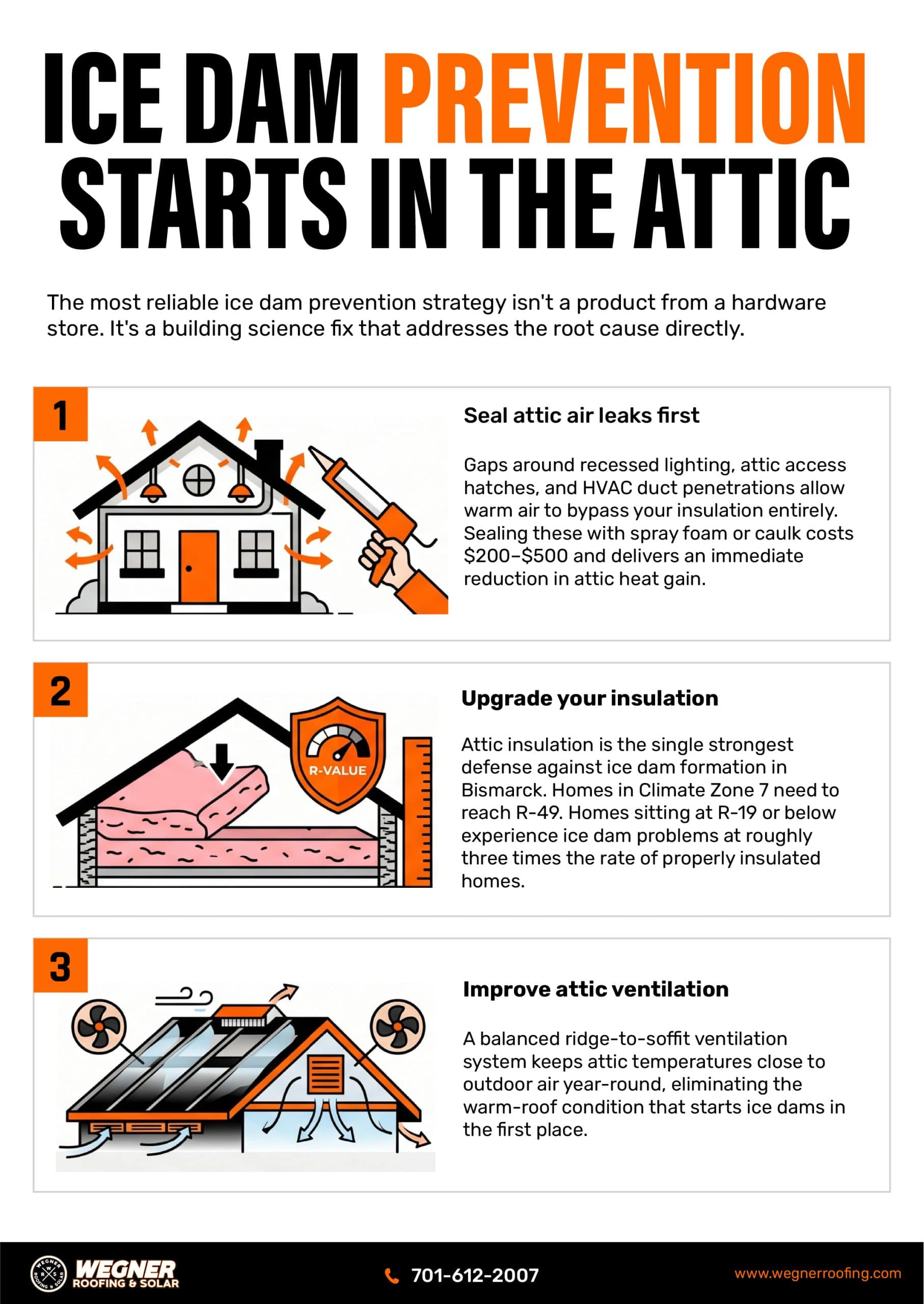
Ice Dam Prevention Starts in the Attic
The most reliable ice dam prevention strategy isn’t a product from a hardware store. It’s a building science fix that addresses the root cause directly.
- Seal attic air leaks first: Gaps around recessed lighting, attic access hatches, and HVAC duct penetrations allow warm air to bypass your insulation entirely. Sealing these with spray foam or caulk costs $200–$500 and delivers an immediate reduction in attic heat gain.
- Upgrade your insulation: Attic insulation is the single strongest defense against ice dam formation in Bismarck. Homes in Climate Zone 7 need to reach R-49. Homes sitting at R-19 or below experience ice dam problems at roughly three times the rate of properly insulated homes.
- Improve attic ventilation: A balanced ridge-to-soffit ventilation system keeps attic temperatures close to outdoor air year-round, eliminating the warm-roof condition that starts ice dams in the first place.
In 2026, a complete attic insulation upgrade for a 1,500 sq ft Bismarck home runs $1,800–$3,500, significantly less than the structural repair bill that follows unchecked water damage.
Unsure if your attic meets the R-49 standard? The Wegner Roofing & Solar team offers free roof and attic inspections throughout Bismarck and Burleigh County to help you identify vulnerabilities before the snow falls.
Book your free winter roof inspection with Wegner Roofing & Solar today!
Warning Signs: Ice Dams Are Already Forming
Stopping winter roof damage in its tracks starts with knowing what to look for:
- Icicles larger than 6 inches hanging in clusters from the eaves after a snowfall.
- Ice ridges at the roofline are more than 2 inches thick and persist beyond 24 hours.
- Water stains on interior ceilings near exterior walls are a clear signal that winter roof damage is already underway.
- Bubbling paint or damp drywall on upper-floor exterior walls after a thaw.
If you’re spotting any of these in your home near Burnt Boat Drive or out in the Lincoln area east of Bismarck, act quickly.
Every week that an ice dam stays in place, water reaches deeper into your roof structure.
How to Handle an Active Ice Dam Safely
When an ice dam has already formed, removal requires care to avoid making the damage worse.
Here are the safest ways to tackle the problem:
- Use a roof rake: The safest DIY approach is pulling snow off the lowest 3–4 feet of your roof from ground level after every storm. This breaks the melt-refreeze cycle before a dam can build.
- Hire professional steam removal: For ice dams that have already grown large, professional steam removal at approximately 250°F is the best option. Steam dissolves the ice safely without touching your shingles or gutters, usually taking 2–3 hours per section on a standard Bismarck ranch-style home.
- Avoid sharp tools and high heat: Never attack an ice dam with a pick, axe, or heat gun. Doing so almost guarantees you will destroy your shingles and trade an ice problem for a roof replacement job.
Can Roof Products Support Ice Dam Prevention?
Self-regulating heat cables are widely sold across Bismarck, and they do work in specific applications.
A heat cable installed in a zigzag pattern along the eaves can prevent ice dams in targeted low-slope areas.
Installed systems run $300-$800 for a single-story Bismarck home in 2026.
But heat cables treat the symptom, not the root cause. If attic heat loss is unchecked, cables will run constantly without solving the root cause of your freezing roof
They belong alongside proper insulation and ventilation improvements, not as a replacement for them.
Is ice already building up along your Bismarck roofline? Wegner Roofing & Solar’s winter roofing specialists serve Bismarck and all of Burleigh County. Fast response times, honest assessments, and no runaround.
Call Wegner Roofing & Solar now for emergency ice dam assistance.

Key Takeaways
Climate Zone 7 homes in Bismarck need at least R-49 attic insulation to meaningfully reduce ice dam risk.
Air sealing combined with insulation upgrades is the most cost-effective ice dam prevention approach available.
Ice dams form when attic heat melts rooftop snow that refreezes at the cold eaves.
Bismarck homeowners face $1,500–$6,000 in repair costs from ice dam water damage in 2026.
Steam removal at 250°F clears active ice dams safely without shingle damage.
Heat cables supplement, but never replace, a properly performing attic system.
Don't Let Bismarck's Winters Win, Act Before the First Snowfall
The best time to invest in ice dam prevention is before the season starts, not after the damage shows up on your ceiling.
Bismarck regularly records snowfall events of 6-10 inches between December and February, and once ice starts accumulating at the eaves, the damage accelerates fast.
Wegner Roofing & Solar has helped hundreds of Bismarck homeowners get through North Dakota’s worst winters without a surprise repair bill.
Whether you need a full attic overhaul or just want a professional eye on your roof before the snow hits, the right move is getting an assessment now.
Don’t wait for a ceiling stain to make the call. Your roof deserves a plan before winter starts, not after.
Get your free 2026 winter roof assessment from the local experts at Wegner Roofing & Solar today.

FAQs About Defeating Ice Dams in Bismarck, ND
How do I prevent ice dams on my roof?
Seal attic air leaks first, upgrade insulation to R-49, and balance your ridge-to-soffit ventilation.
Tackling all three before Bismarck’s first major snowfall gives your roof the best chance of getting through winter without water intrusion or ceiling damage.
Does insurance cover ice dam roof damage?
Most homeowner’s policies cover sudden ice dam water intrusion, including ceiling repairs and shingle work. Damage linked to long-term neglect is typically excluded.
Photograph all damage immediately, file your claim quickly, and ask your adjuster specifically about ice dam coverage limits.
How do I remove an ice dam safely?
Use a roof rake from ground level to clear snow off the lower 3-4 feet of your roof after each storm.
For large existing dams, hire a professional using steam equipment.
Avoid hammers, axes, or heat guns; each risks voiding your shingle manufacturer’s warranty.
Table of Contents

Wind Damage Roof Repair in Bismarck, ND Table of Contents Bismarck sits inside the Missouri River Valley wind corridor, where severe spring and fall storm
Partial Roof Replacement in Bismarck: When It Works, and Why the Freeze Date Matters Table of Contents Drive down Airport Road toward the Missouri River
Getting a Bismarck Roof Hail Inspection Before Your Claim Window Closes Table of Contents Missouri River Valley hailstorms don’t announce themselves politely. They roll in
Hail Damage to Siding in Bismarck: What to Look For and How Claims Work Table of Contents Bismarck-Mandan’s spring and summer storm cells roll off
Roof Blistering vs. Hail Damage on a Bismarck Roof: How the Patterns Differ Table of Contents Bismarck’s summer sun hammers south-facing roof slopes in Northridge