Roof Blistering vs. Hail Damage on a Bismarck Roof: How the Patterns Differ
Table of Contents
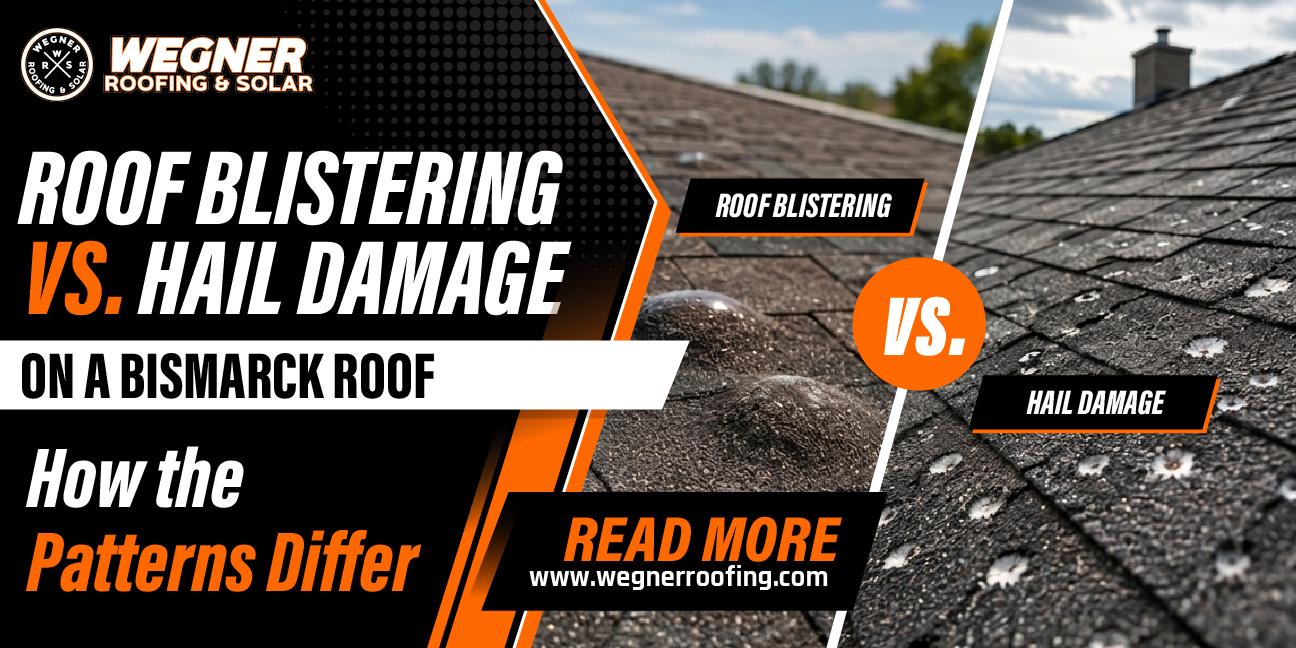
Bismarck’s summer sun hammers south-facing roof slopes in Northridge and South Bismarck up to 160°F by mid-July, and that heat load is exactly what triggers shingle blistering, bubbles homeowners often mistake for hail bruises once a Missouri Valley storm rolls through.
The confusion between these two issues costs local homeowners real money at claim time.
Here is the short version for 2026: hail bruising is typically a covered peril under standard North Dakota policies, while blistering is usually classified as a manufacturing or ventilation defect that insurance will not cover.
Knowing how to spot the difference before your adjuster arrives can completely change the outcome of your claim.
What Blistering Looks Like on a Bismarck Shingle
Blistering happens when trapped moisture or asphalt volatiles inside the shingle mat expand under heat and push a bubble to the surface.
Spotting roof blistering vs. hail damage starts with checking where the marks actually sit, not just what they look like.
Signs your roof is dealing with blistering, not hail:
- Bubbles cluster almost exclusively on south and west-facing slopes that catch direct afternoon sun.
- Damage concentrates along sunlit corridors like Airport Road rather than scattering across the whole roof.
- Many bubbles stay intact for months before ever popping.
- The pattern stays put regardless of recent storm activity.
What Hail Bruising Looks Like After a Bismarck Storm
Hail bruising is a mechanical impact mark, not a heat reaction.
Ice striking a shingle fractures the fiberglass mat underneath while the surface looks only slightly dented.
When comparing hail damage vs. roof blistering, texture under pressure is one of the fastest tells.
What to check for a hail hit:
- Press a thumb into the mark; a soft, spongy give confirms the soft spot bruise test.
- Impacts turn up on every slope the storm’s wind angle exposed, not just the hot ones.
- Marks appear suddenly, tied to a specific storm date rather than building up over a season.
- Surrounding shingles on the same slope often show matching hits.
The Key Giveaway: Random vs. Directional Damage Patterns
The fastest way to separate the two is mapping where the damage sits.
A random vs directional damage pattern tells the real story: hail falls with the wind angle, so impacts cluster on the storm-facing slope with scattered bruising elsewhere.
Blistering follows the sun instead, staying locked onto whichever slope bakes hardest between 1 and 5 p.m.
This pattern test is the fastest way to settle a roof blistering vs. hail damage argument before it reaches an adjuster.
Not sure which pattern your roof is showing? Wegner Roofing & Solar’s crews can map every slope during a free roof inspection and tell you honestly which one you’re dealing with.
Contact Wegner Roofing & Solar to get on the schedule this week!
Granule Loss Tells Two Different Stories
Both problems shed granules, but the pattern underneath differs.
Granule loss adds another data point to the diagnosis, especially when matched against a specific storm date.
The difference in granule loss patterns:
- Popped blister granule loss leaves a small crater with a raised, cracked rim, since the bubble ruptured from internal pressure.
- Hail-related loss exposes bare asphalt in a rounder zone with the mat fractured beneath it.
- Blister craters sit isolated on sun-exposed slopes; hail bruises and impact marks appear in clusters across storm-facing areas.
- Gutter granule buildup after a storm often points to hail, while gradual buildup over a hot summer points to blistering.

Why an Adjuster's Denial Letter Says "Blistering" Instead of Hail
Receiving a claim denial letter citing “blistering” usually means the inspector found bubble-shaped damage on hot slopes with no matching storm-wide impact pattern.
Adjusters separate a manufacturing defect vs storm damage because heat and material issues fall under the shingle warranty, not the storm policy.
Adjusters lean on the roof blistering vs. hail damage distinction to protect claim payouts, which is fair when applied correctly but frustrating when the pattern was misread on a quick walk-through.
The Test Square Count That Settles the Argument
Professional inspectors use a test square hail count to prove or disprove a paper claim.
This is often what settles a roof blistering vs. hail damage dispute once and for all.
How the test square process works:
- Inspectors mark a 10-by-10-foot section on each slope of the roof.
- Every confirmed hit inside the square gets counted and photographed with chalk circles.
- Many North Dakota carriers require roughly 8 to 10 hits per test square before approving a full slope replacement, though this exact number can vary by insurance company and shingle type.
- Squares are placed on multiple slopes to compare directional damage against sun-exposed blistering zones.
Wegner Roofing & Solar documents every test square with dated photos before your adjuster ever steps on the roof.
Book your free, no-obligation inspection today and get a report you can actually use.
Key Takeaways
Blistering clusters on sun-exposed south/west slopes; hail follows the storm’s wind direction across multiple slopes.
The soft spot bruise test (spongy give under thumb pressure) confirms hail; blisters stay firm until they pop.
Popped blister craters have raised, cracked rims; hail zones show fractured matting beneath bare asphalt.
A documented test square hail count (8–10 hits per section) is what most ND carriers require for approval.
A second inspection from a licensed local contractor can catch damage a rushed adjuster walk missed.
Don't Let a Denial Be the Final Word
A blistering diagnosis on your denial letter isn’t automatically final.
Bismarck’s swing between 90°F July afternoons and sub-zero January nights stresses shingles from both directions, and it’s genuinely easy for a rushed inspection to mix up heat damage with storm damage on a roof carrying both.
Before you accept a denial or shelve the claim, get a documented second opinion mapping every slope.
For a deeper look at how North Dakota claims move once damage is confirmed, our Bismarck ND Wind Storm Roof Insurance Claim Guide walks through the full filing process step by step.
Ready to find out what’s really on your roof? Request a storm damage roof repair evaluation online. Our Bismarck crews will document the pattern, run the test squares, and give you a straight answer either way.
You can also check verified local reviews on our Wegner Roofing & Solar Google Business Profile before you call.


FAQs About Roof Blistering and Hail Damage
How can I tell shingle blisters from hail bruises on a Bismarck roof?
Blisters cluster on sun-facing slopes and stay firm to the touch; hail bruises appear on storm-facing slopes and feel soft when pressed.
Location and texture are the fastest clues, and a licensed inspector can confirm with a test square count.
Does blistering void a shingle warranty?
It depends. Warranties may cover blistering from manufacturing defects but will deny claims caused by poor attic ventilation.
Since homeowner’s insurance covers neither, a correct diagnosis is critical.
You must provide documentation proving the exact cause to file a warranty claim.
Can a second opinion overturn a denied hail claim?
Yes. A documented re-inspection with test square counts and storm-date evidence has reopened many denied North Dakota hail claims.
Insurers reconsider when a licensed contractor provides photos and hit counts the original adjuster missed.
Table of Contents
Wind Damage Roof Repair in Bismarck, ND Table of Contents Bismarck sits inside the Missouri River Valley wind corridor, where severe spring and fall storm
Partial Roof Replacement in Bismarck: When It Works, and Why the Freeze Date Matters Table of Contents Drive down Airport Road toward the Missouri River
Getting a Bismarck Roof Hail Inspection Before Your Claim Window Closes Table of Contents Missouri River Valley hailstorms don’t announce themselves politely. They roll in
Hail Damage to Siding in Bismarck: What to Look For and How Claims Work Table of Contents Bismarck-Mandan’s spring and summer storm cells roll off
Roof Blistering vs. Hail Damage on a Bismarck Roof: How the Patterns Differ Table of Contents Bismarck’s summer sun hammers south-facing roof slopes in Northridge