Table of Contents
Bismarck-Mandan’s spring and summer storm cells roll off the Missouri River valley fast, often dropping golf-ball hail with barely ten minutes of warning.
If your home sits near Hay Creek, Northridge, or anywhere along the Bismarck Expressway corridor, you’ve likely watched one storm chew up siding on the west wall while leaving the east side untouched.
A hail damage siding claim in Bismarck can cover anything from a few damaged panels to a full-elevation replacement, depending on how thoroughly the damage gets documented.
The tricky part is that hail damage to siding doesn’t always look dramatic.
Cracks can be hairline, bruising can hide under normal daylight, and a rushed inspection misses exactly the evidence an adjuster needs to approve your claim.
What Hail Damage Looks Like on a Bismarck Home's Siding
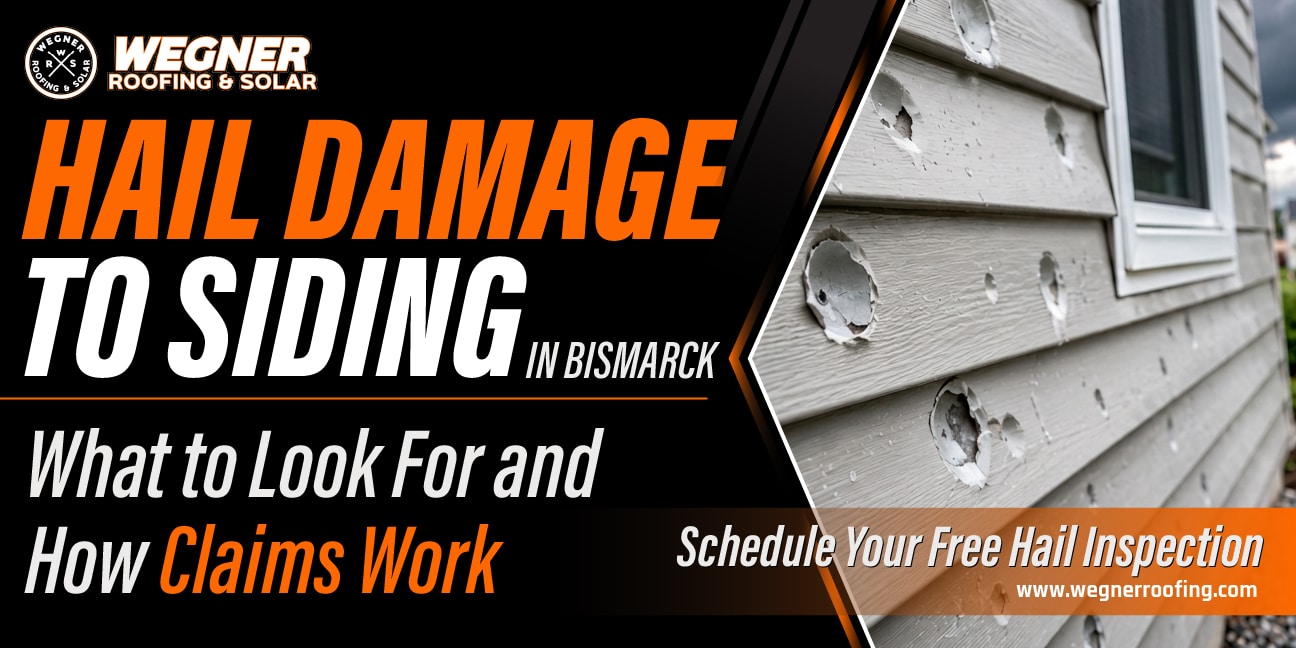
Hail impacts on vinyl siding usually show up as small circular fractures, chipped bottom edges, or clean punctures where a larger stone hit at an angle.
Hail cracks in vinyl siding tend to cluster on north- and west-facing walls, since that’s the direction most Bismarck-Mandan storms track from.
Signs to check for after any hailstorm:
- Dime- or nickel-sized circular cracks near panel seams.
- Chipped or missing chunks along the bottom lip of a panel.
- Dented J-channel, corner posts, or window trim.
- Bruising that only appears when sunlight hits the wall at a low angle.
- Cracked or split window screens and dented gutters nearby (a strong clue hail hit the siding too).
Siding Chalking vs. Hail Impact: Don't Confuse the Two
Siding chalking vs. hail impact is a mix-up we see constantly.
Chalking is a powdery white residue that forms naturally on siding 15-20 years old as UV exposure breaks down the surface resin.
A simple wipe test helps differentiate the two. Hail impacts will disrupt the oxidized, chalky layer on older siding, leaving clean ‘spatter’ marks:
- Chalk residue on the cloth, panel surface intact: normal aging, not storm damage.
- Clear impact marks, cracks, or punctures disrupting the chalk: likely hail impact worth documenting.
Vinyl vs. Fiber Cement: Which Holds Up Better Against Bismarck Hail
Vinyl siding is the most common exterior in Bismarck because it’s affordable and low-maintenance, but standard-gauge panels can crack or puncture once hail exceeds about an inch in diameter.
That’s a real consideration when you’re weighing repair versus full replacement after a storm.
Fiber cement hail resistance is noticeably higher because the material is denser and doesn’t flex on impact the way PVC does. Quick comparison for Bismarck homeowners:
- Vinyl siding: Affordable, easy to install, but prone to cracking or punching through in hail over 1 inch.
- Fiber cement siding: Denser material, better hail resistance, though panel edges can still chip in a severe event.
- Both materials: Can suffer trim, J-channel, and fastener damage even when panels themselves survive.
If you’re rebuilding after a hail damage siding claim, this is the right moment to ask your adjuster about upgrading materials.
Not sure if your siding qualifies for a storm damage claim? Contact Wegner Roofing & Solar for a free inspection before you ever talk to your adjuster.
How a Bismarck Hail Damage Siding Claim Actually Works
North Dakota homeowner policies generally cover hail and wind damage to siding the same way they cover roofs.
Many Bismarck storms hit the roof and siding at once, so pairing your storm damage roof repair claim with your siding claim keeps everything under one file and one adjuster visit.
Here’s the process, step by step:
- File with your carrier and get a claim number once damage is confirmed.
- Get a documented inspection covering every affected elevation, not just the visible side.
- Attend the adjuster meeting together so nothing gets left off the scope.
- Agree on scope and any supplements if the initial estimate misses damage.
- Complete the repair or replacement to manufacturer and code specifications.
Matching Siding on a Partial Claim
Matching siding on a partial claim is where most homeowners run into trouble.
North Dakota has no statute requiring insurers to match discontinued colors or profiles, so carriers sometimes approve only the damaged wall.
Solid siding hail claim documentation, dated photos, manufacturer confirmation that a color is discontinued, and a clear damage count per elevation gives you the strongest case for full replacement instead of a mismatched patch.
A properly built North Dakota siding replacement claim file is often the difference between a partial fix and a full exterior upgrade.

Ready to start your siding hail claim documentation? Schedule your free Bismarck inspection today and walk into your adjuster meeting with a photo report they can’t argue with.
Key Takeaways
Hail-damaged siding shows up as circular cracks, chips, and dented trim, usually on north- and west-facing walls.
A quick chalk-cloth test separates normal aging from real hail-damaged siding before you file a claim.
Fiber cement resists cracking better than vinyl once hail passes the one-inch mark.
Full-elevation replacement approval depends heavily on documentation, since North Dakota has no matching law.
Roof and siding damage from the same storm can usually be combined into one insurance claim.
Don't Let a Quiet Crack Become a Costly Leak
A cracked panel might look cosmetic today, but every gap in your siding is an open door for moisture, ice, and Bismarck’s next 40-mph wind gust.
Waiting until spring to deal with hail-damaged siding almost always costs more than addressing it right after the storm, both in repair scope and in claim eligibility.
Getting a professional set of eyes on your exterior now protects your home and your investment before the next system rolls through.
Don’t wait for the next hailstorm to find out your siding wasn’t as sound as it looked.
Book your free post-storm inspection at Wegner Roofing & Solar today.
You can also check what your Bismarck neighbors are saying on our Google Business Profile.


FAQs About Bismarck Hail Damage & Siding Claims
What does hail damage look like on Bismarck vinyl siding?
Hail damage on vinyl siding looks like small circular cracks, punched-through holes, or chipped edges near panel seams, often concentrated on north- and west-facing walls.
Dented gutters, window screens, and AC fins nearby usually confirm storm impact rather than normal wear.
Is fiber cement more hail-resistant than vinyl?
Yes, fiber cement siding is noticeably denser and less likely to crack or puncture than standard vinyl when struck by hail exceeding an inch in diameter.
However, homeowners must remember that both materials can still easily chip or dent during a severe Bismarck hailstorm.
Can siding and roof damage go on the same claim?
Yes, most North Dakota insurance carriers allow a single claim number to cover both the roof and siding damage from the same storm event.
This simplifies your adjuster meeting and often speeds up final approval since both exterior losses share identical storm date evidence.
Table of Contents
Wind Damage Roof Repair in Bismarck, ND Table of Contents Bismarck sits inside the Missouri River Valley wind corridor, where severe spring and fall storm
Partial Roof Replacement in Bismarck: When It Works, and Why the Freeze Date Matters Table of Contents Drive down Airport Road toward the Missouri River
Getting a Bismarck Roof Hail Inspection Before Your Claim Window Closes Table of Contents Missouri River Valley hailstorms don’t announce themselves politely. They roll in
Hail Damage to Siding in Bismarck: What to Look For and How Claims Work Table of Contents Bismarck-Mandan’s spring and summer storm cells roll off
Roof Blistering vs. Hail Damage on a Bismarck Roof: How the Patterns Differ Table of Contents Bismarck’s summer sun hammers south-facing roof slopes in Northridge