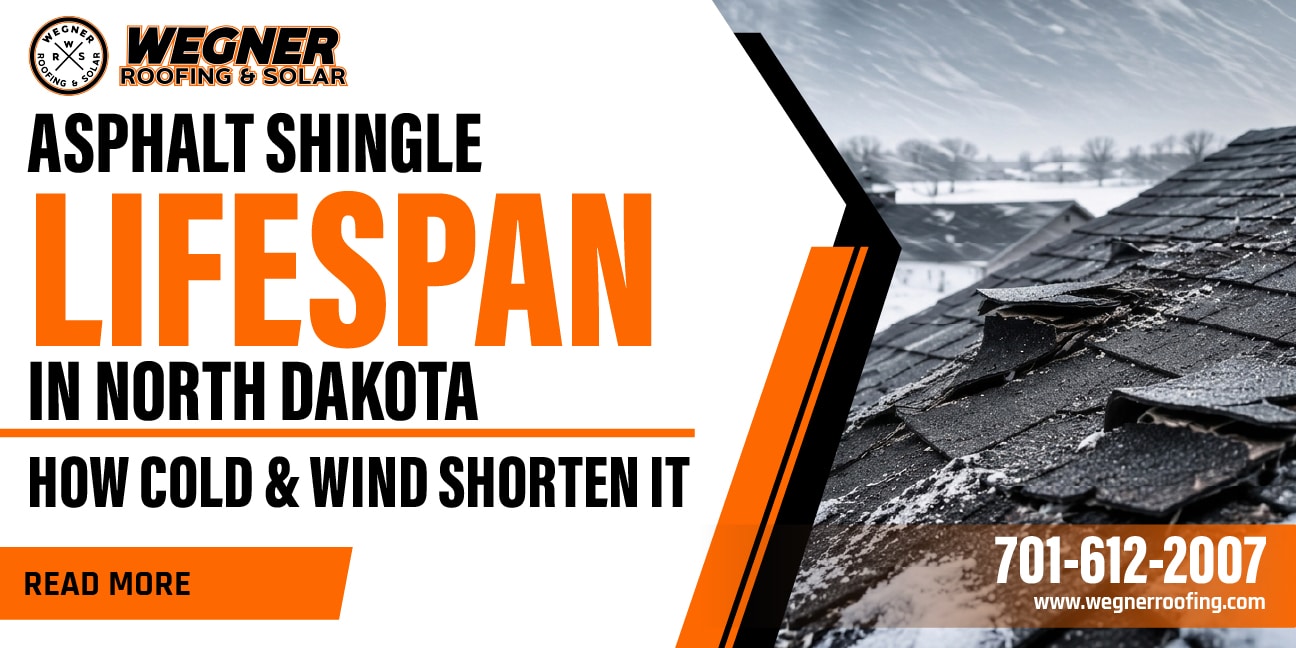
Asphalt Shingle Lifespan in North Dakota: How Cold & Wind Shorten It
Table of Contents
Bismarck, ND, is where Canadian arctic air collides head-on with High Plains wind, a year-round assault on building materials.
Neighborhoods like Pioneer Park and the Southgate corridor see January temperatures plunge past -10°F, while gusts through the Missouri River valley regularly top 50 mph without warning.
While national manufacturers boast a 25–30 year asphalt shingle lifespan, Bismarck’s reality is closer to 15-22 years, sometimes less after back-to-back severe storm seasons.
In 2026, a full roof replacement costs between $8,500 and $18,000.
However, ignoring early signs of wear can drive that cost much higher by allowing water to rot your roof decking or ruin interior drywall.
Understanding exactly what is cutting your roof’s life short is the best way to protect your investment
Why Bismarck's Climate Cuts Asphalt Shingle Lifespan Short
North Dakota doesn’t ease up on roofing systems.
Bismarck averages over 40 inches of annual snowfall, and the Missouri River corridor funnels arctic air and northwest winds straight through the city.
The year-round average wind speed here sits at nearly 11 mph, with spring months routinely averaging over 12 mph, making it one of the windier major U.S. cities.
The shingle lifespan cold climate research is definitive: roofs in USDA Hardiness Zone 4a, where Bismarck sits, degrade 20–30% faster than roofs in temperate regions like the Carolinas or Pacific Northwest.
Local roofers confirm this every spring when they climb onto roofs after breakup.
Asphalt Shingle Lifespan by Product Type: What Bismarck Numbers Actually Look Like
- 3-Tab Shingles: 12-17 years (vs. 20-25 in mild climates).
- Architectural/Dimensional Shingles: 18-22 years (vs. 25–30 in mild climates).
- Class 4 Impact-Resistant Shingles: 22-27 years, the strongest long-term return for North Dakota hail and wind exposure.
How 140+ Freeze-Thaw Cycles per Year Destroy Asphalt Shingle Lifespan
Bismarck records over 140 freeze-thaw cycles annually, and each one is a small, compounding strike against your roof.
The damage follows a predictable pattern:
The 4-Stage Damage Sequence
- Afternoon melt: During brief periods of daytime warmth, melting snow and ice allow water to seep beneath cracked or loosened shingles.
- Overnight freeze: When temperatures drop overnight, that trapped water freezes and expands beneath the shingle surface, which breaks the critical adhesive seal strip.
- Spring UV exposure: Under the direct sunlight of spring, these physically weakened shingles shed their protective granules at a much faster rate.
- Wind events: Finally, because the seal strips have failed, these vulnerable shingles easily lift and detach during the next 40+ mph gust of wind.
By year 10, a Bismarck roof under normal conditions can show surface deterioration comparable to an 18-year-old roof in Charlotte, NC.
That’s exactly what compounding climate stress does to asphalt shingle lifespan on the Northern Plains.
Wind: The Factor That Quietly Takes Years Off Your Bismarck Roof
Bismarck’s 12.5 mph average wind speed ranks among the highest of any major U.S. city.
But averages don’t peel shingles, gusts do. Northwest gusts in fall and winter routinely exceed 40 mph, the threshold where standard shingle seal strips begin to lift at the edges.
Once a seal strip fails, every future rain event becomes a potential leak point.
How long do shingles last on north- and west-facing roof slopes in Bismarck?
Local roofing contractors consistently observe 3–5 fewer years of lifespan on those exposed faces compared to south or east-facing sections of the same roof.
Warning Signs That Your Bismarck Roof Is Reaching End of Life
Recognizing when to replace shingles early can save you from a $30,000+ interior water damage repair.
These are the signals North Dakota homeowners should monitor:
- Granules collecting in gutters: This indicates accelerated surface breakdown after harsh winters and UV cycling.
- Curling or cupping at shingle edges: This damage is a direct result of repeated freeze-thaw stress.
- Cracked shingles: These are very common after ice dam pressure builds along the eaves.
- Daylight visible from inside the attic: Seeing this indicates serious underlayment and shingle failure.
- Shingles older than 15 years in Bismarck: For these older roofs, an annual professional inspection is non-negotiable.
Asphalt shingle lifespan doesn’t expire all at once. It declines, and one hard Bismarck winter can push that decline past the point of repair.

Seeing granules in your gutters or curled shingle edges? Those are your roof’s early warning signals. The team at Wegner Roofing & Solar understands North Dakota roofing conditions inside and out, and can give you an honest picture of exactly where your roof stands before the next storm season.
Book your no-obligation evaluation with Wegner Roofing & Solar now!

Key Takeaways
Asphalt shingle lifespan in Bismarck averages 15-22 years, 20-30% shorter than national manufacturer estimates.
140+ annual freeze-thaw cycles and 12.5 mph sustained average winds are the two primary lifespan reducers.
Class 4 impact-resistant shingles deliver the best long-term value for North Dakota homeowners.
Roofs over 15 years old in Bismarck’s climate require annual professional inspection.
Granule loss, curling edges, and cracked shingles are the top early warning signs to watch.
Your Roof Is Fighting North Dakota Every Day, Don't Wait for It to Lose
The Missouri River valley winds don’t take off-seasons.
Freeze-thaw cycles begin in October and don’t let up until April.
Every one of those events quietly wears down the asphalt shingle lifespan, protecting your home.
The difference between a roof lasting 22 years and one failing at 14 often comes down to one timely inspection.
In 2026, catching a failing Bismarck roof early can cost nothing more than a free assessment.
Missing it risks $8,500-$18,000 in emergency replacement, and potentially far more if interior water damage follows.
Ready to know the real condition of your roof? Wegner Roofing & Solar has helped Bismarck homeowners protect their homes through North Dakota’s harshest winters. Whether you need a quick inspection, targeted repair, or a full replacement plan, their local team knows exactly what your roof is up against.
Stop guessing and start protecting your home. Contact Wegner Roofing & Solar today!

FAQs About Your Roof's True Lifespan in Bismarck, ND
How long do asphalt shingles last in North Dakota?
In North Dakota, asphalt shingle lifespan typically runs 15-22 years, well below the 25-30-year national average.
Bismarck’s over 140 annual freeze-thaw cycles, persistent high winds, and extreme temperature swings accelerate shingle degradation well beyond what most manufacturer warranties account for.
Does cold weather shorten shingle life?
Yes. Cold weather, especially repeated freeze-thaw cycles, causes shingles to crack, lift, and lose protective granules faster.
In Bismarck, roofs age 20-30% faster than those in temperate U.S. climates.
Sustained freezing also weakens adhesive seal strips that keep shingles flat and water-resistant.
How do I know when shingles need replacing?
Check gutters for granule buildup, look for curling or cracked shingles across the roof surface, and inspect your attic for visible daylight.
Bismarck roofs older than 15 years should be professionally evaluated annually.
When multiple warning signs appear simultaneously, a full replacement assessment is the appropriate next step.
Table of Contents
Wind Damage Roof Repair in Bismarck, ND Table of Contents Bismarck sits inside the Missouri River Valley wind corridor, where severe spring and fall storm
Partial Roof Replacement in Bismarck: When It Works, and Why the Freeze Date Matters Table of Contents Drive down Airport Road toward the Missouri River
Getting a Bismarck Roof Hail Inspection Before Your Claim Window Closes Table of Contents Missouri River Valley hailstorms don’t announce themselves politely. They roll in
Hail Damage to Siding in Bismarck: What to Look For and How Claims Work Table of Contents Bismarck-Mandan’s spring and summer storm cells roll off
Roof Blistering vs. Hail Damage on a Bismarck Roof: How the Patterns Differ Table of Contents Bismarck’s summer sun hammers south-facing roof slopes in Northridge